How to Do Link Building for a Startup: From DR 0 to Actually Ranking
Written ByReviewed byUpdated


On this page
- Why link building is different when you are a startup
- Find your starting line (the 60-second diagnosis)
- The DR 0 cold start: your first 10 to 20 links when you have nothing
- Step 1: Submit to every legitimate directory and listing
- Step 2: Lock in your foundational entity and citation links
- Step 3: Show up in the communities where your buyers already are
- "But my DR is 0, how do I exchange links?"
- Point your links where they make money (strategic targeting)
- Stop chasing keywords you cannot rank
- Pick pages by rankability and revenue, not by vanity
- Scalable plays for when you have traction or budget
- Expert commentary is the best free link for a founder
- Linkable assets and digital PR: the paid-attention plays
- Competitor gap replication is the prospecting engine
- Link building in the AI era: get cited, not just ranked
- In-house, freelancer, agency, or do it yourself
- The part every guide skips: keep the links you paid for
- Your startup link-building blueprint, in order
- Phase 0: DR 0 (weeks 1 to 4)
- Phase 1: DR 10 to 20 (months 2 to 4)
- Phase 2: DR 20 to 40 (months 4 to 12)
- Phase 3: DR 40+ (ongoing)
Search "link building for startups" and every result hands you the same thing: a list of 25 tactics. Guest posts, digital PR, HARO, broken link building, skyscraper, linkable assets, and on and on. No order. No sense of which one to do first. And no acknowledgment that you might be two people with a domain that launched last month, a Domain Rating of 0, and roughly zero dollars to spend.
A list of tactics is not a plan. Worse, most of those tactics do not even work at your stage. You cannot run a digital PR campaign off a three-page website. Nobody will exchange links with a DR 0 domain. And pointing your first links at a keyword like "CRM" is setting fire to the little effort you have.
This is a blueprint, not a list. It is keyed to where you actually are: your stage, your team, your budget, and your current DR. Find your lane, do the steps in order, and you will move. It covers the cold start at DR 0, how to pick links that make money instead of vanity, the scalable plays for when you have traction, the in-house-versus-agency math, and the step most guides drop: keeping the links once you have paid for them.
Why link building is different when you are a startup
An established site and a week-old startup are not playing the same game, even though they read the same advice.
An established domain has trust. Google recognizes it as an entity, people search for its brand by name, and its link history makes new links look natural. Links still move rankings, but more weakly than the 2015-era playbooks claim, and the effect is strongest exactly where you are: a new site in a niche without much competition. For a brand-new domain, links are one of the few signals you can actually influence.
A startup has the opposite of all that. Zero DR. No entity recognition. No branded search. No link history. This changes the problem in three concrete ways:
- Nobody wants to link to you or swap with you. A link from a DR 0 site passes almost nothing, so you have nothing to trade. The reciprocal-link tactics that fill every listicle assume you already have authority to offer.
- You cannot rank the keywords you want. The head terms in your category are owned by DR 70 to 90 incumbents with thousands of referring domains. No number of links fixes that in your first year.
- You cannot outspend the problem. Bought links realistically run from around $150 to a few hundred dollars each, and a competitive niche can eat several thousand a month. Bootstrapped, that budget does not exist, so your edge has to be sequence and selectivity, not volume.
So the question for a startup is never "which tactic?" It is "which move is available to me right now, given what I have and where my domain stands?" Answer that and the tactics sort themselves.
Find your starting line (the 60-second diagnosis)
Before a single link, place yourself on two axes. Everything in this guide keys off these two numbers.
Axis 1: your resources. Who can do the work, and what can you spend?
- Solo or bootstrapped. You, maybe a co-founder. Marketing budget near zero. Time is the only currency you have.
- Small team, seed-stage. Two to ten people. One person can own SEO part-time. Maybe $200 to $1,000 a month for links and tools.
- Funded team. Ten-plus people, a marketer on staff or a budget to hire one, $2,000+ a month you can actually deploy on link building.
Axis 2: your authority. Where does your domain stand today?
- DR 0, just launched. Under ten pages, no links, no traffic. Nobody knows you exist.
- DR 10 to 20. You have foundational links, a handful of content pages, the first trickle of traffic.
- DR 20 to 40+. Real traction, a content engine running, keywords starting to rank.
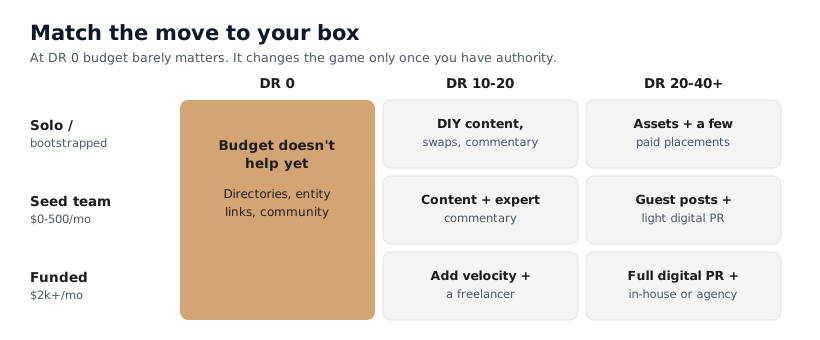
The mistake almost every founder makes is copying the playbook of a company one or two boxes ahead of them. A solo founder at DR 0 reading a "how we built 150 links with digital PR" case study will burn a month on outreach nobody answers. Match the move to your box. The next three sections walk the boxes in order: the DR 0 cold start, the shift to revenue-focused targeting once you have some authority, and the scalable plays for when you have traction or budget.
The DR 0 cold start: your first 10 to 20 links when you have nothing
This is the part the listicles skip, and it is the part that actually matters most, because it is where you are stuck.
At true DR 0, outreach is a waste of time and link exchanges are off the table. A stranger has no reason to link to a site with no authority, no traffic, and no track record. So you do not start by asking anyone for anything. You start with the links you can get without permission and without a swap. There are three sources, and you work them in this order.
Step 1: Submit to every legitimate directory and listing
Directories are the single fastest way off zero. They do not require outreach, approval is often automatic or fast, and each accepted listing is a real link from an established domain. Get listed enough places, and you can lift a brand-new domain from DR 0 into the low teens. How far depends on how many you get accepted and how strong those directories are.
Work through these, roughly in order of value:
- Startup and launch platforms. Product Hunt, BetaList, Indie Hackers, Hacker News (Show HN), Startup Stash, SaaSHub.
- Business and data profiles. Crunchbase, LinkedIn company page, Google Business Profile if you have a location, Owler.
- Software directories. G2, Capterra, GetApp, Software Advice, AlternativeTo, Slant. These double as review sites, so they pay off twice.
- Niche directories. Whatever exists for your specific category. A "best tools for [your niche]" list is worth more than a generic web directory, because it is relevant, and relevance counts for more than raw authority.
Two rules keep this clean. Skip the spammy "submit to 500 directories for $10" services, which land you on link farms Google ignores. And keep your name, address, and description identical everywhere (consistent NAP), because that consistency is part of how Google and AI systems learn you are a real entity.
Submitting to thirty or forty places creates its own problem, though: you lose track of which accepted you, which are still live, and which quietly dropped your listing three months later. That tracking problem is exactly what a backlink monitor is for, and it is the reason I have been building LinkWatchr for the last couple of years. If you want a head start, we keep a categorized list of startup and SaaS directories with their DRs, cleaned up and sorted by niche.
Email support@linkwatchr.com for the categorized directory list.
Step 2: Lock in your foundational entity and citation links
Beyond directories, there is a set of profile links every real company has, and their absence quietly marks you as not-yet-a-real-thing. These pass little direct ranking power, but they build the entity signals that both Google and AI models rely on to understand who you are.
Claim and fill out: your LinkedIn company page, X/Twitter, a founder LinkedIn that names the company, GitHub if you are technical, an About.me or personal site for the founder, YouTube if you will publish video, and your relevant social profiles. Link each back to your site, and keep the descriptions consistent with everything else. This is an afternoon of work, once, and it is the floor you build the rest on.
Step 3: Show up in the communities where your buyers already are
This is the highest-return free move at DR 0, and the one most likely to backfire if you do it wrong.
Go where people are already discussing the problem you solve: Reddit (the specific subreddits for your niche), Quora, Indie Hackers, niche Slack and Discord groups, and specialist forums. These places do two things at once. Some links are followed and pass value; even the nofollow ones drive real referral traffic and, increasingly, feed AI answers, because ChatGPT and Perplexity lean heavily on Reddit and Quora threads when they generate responses.
The rules that separate value from a ban:
- Warm the account first. A brand-new account that immediately drops links reads as spam and gets removed (or gets the whole domain shadow-flagged). Spend a week or two participating before you ever link.
- Help first, link second. Answer the actual question. Give the person something useful whether or not they ever click your link. The answer has to stand on its own. The link just rides along with it.
- Be specific and show the work. A vague "check out our tool" gets ignored and reported. A concrete, worked answer gets upvotes and clicks.
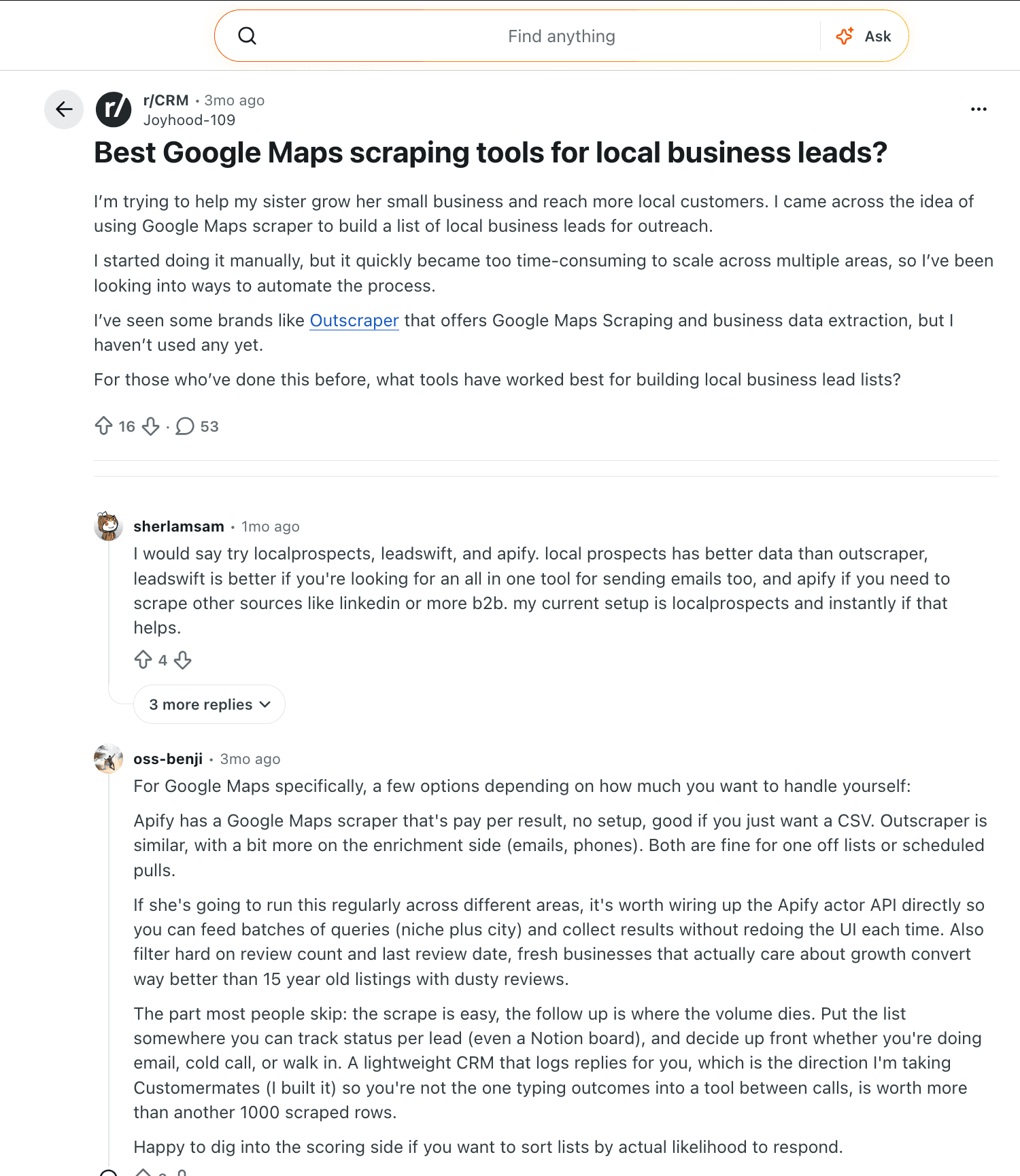
Here is what that looks like in practice. Say someone posts in a startup subreddit: "How do I start link building for my startup when my DR is 0?" A bad answer is "try our tool." A good answer, from a founder who happens to run a backlink tool, reads more like this:
Start with directories, because they are the only links you can get before anyone knows you exist. Submit to Product Hunt, Crunchbase, G2, and the niche directories for your category, plus any "best tools for X" listicles. That alone can move you from DR 0 into the low teens over a few weeks. The trap is that you will submit to 40 places and lose track of which stuck, so keep a simple sheet from day one: directory, date submitted, status, DR. Once you cross DR 10 or so, you can start doing peer link swaps and expert-commentary links, which do not work while you are at zero.
That answer helps whether or not the reader ever hears of your product. The credibility does the selling. If a mention of your tool fits naturally (someone asks "what do you use to track all this?"), you have earned it. If it does not fit, you leave it out and still get the reputation.
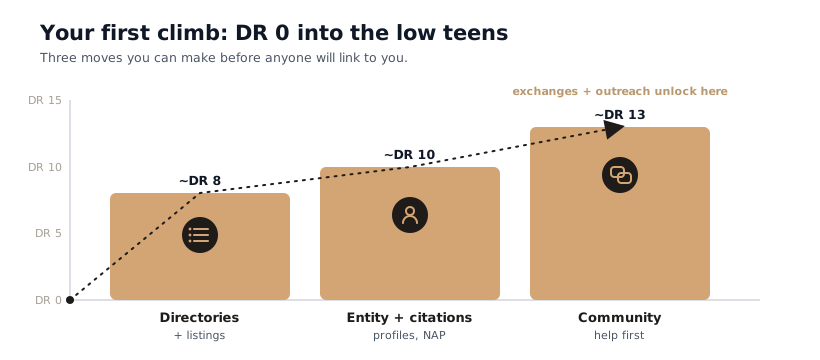
Run these three steps and, in four to eight weeks, a domain that started at zero is sitting in the low teens with ten to twenty real links, a set of entity signals, and a foothold in the communities that matter. That is the cold start. Now the game changes.
"But my DR is 0, how do I exchange links?"
The honest answer: at a true zero, you mostly cannot, and you should not lead with exchanges anyway.
A link exchange is a trade. You give a link, you get a link. When your domain passes almost nothing, the other side is trading real value for nothing, so anyone worth swapping with will decline. This is why "just exchange links" is bad advice for a startup at zero. Do the cold start first.
Once directories and community work have nudged you into the DR 10 to 15 range, exchanges become possible, and there are two clean ways to run them:
- Peer swaps with other startups at your stage. Find non-competing startups in adjacent niches at a similar DR and trade a relevant, in-content link each. Both sides gain, and because you are at similar authority, the trade is fair.
- ABC (three-way) exchanges. Instead of A links to B and B links to A (which Google can spot as a reciprocal pattern), A links to B, B links to C, and C links to A. It looks more natural because it is not a direct swap.
Keep exchanges a small slice of your profile, not the strategy. They are one of the most-used tactics and one of the least effective: plenty of people trade links, and almost nobody rates swapping as their best channel. Use them as a supplement between peers, keep them relevant (same or adjacent niche) and in-content rather than in a footer, never sitewide, and track what you owe whom so a partner does not pull your link because you forgot to deliver theirs.
Point your links where they make money (strategic targeting)
Once you are off zero, the failure mode flips. It stops being "I cannot get links" and becomes "I am getting links but nothing is moving." Almost always, the cause is the same: the links are pointed at the wrong places.
Stop chasing keywords you cannot rank
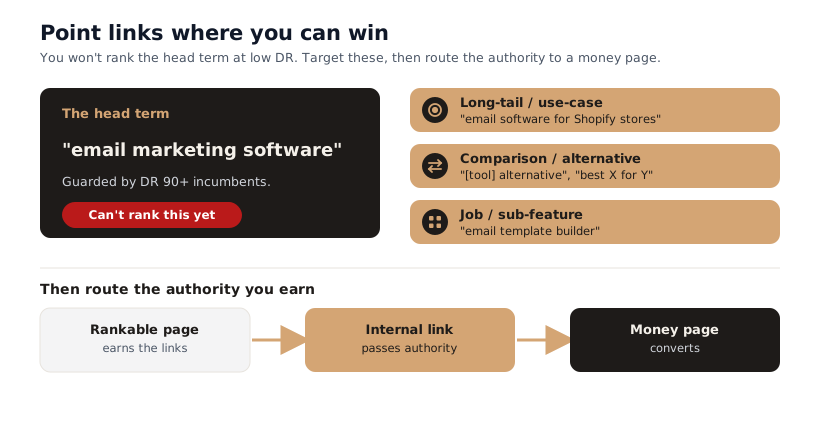
The most expensive mistake a startup makes is aiming at the head term. If you sell a CRM, you will not rank for "CRM." That SERP belongs to Salesforce, HubSpot, and a wall of DR 90 domains with a decade of links. Same story for "email marketing software," "project management tool," or any one-or-two-word category term. Pointing your hard-won early links at those pages is pure waste, because the page cannot rank no matter how many links it gets.
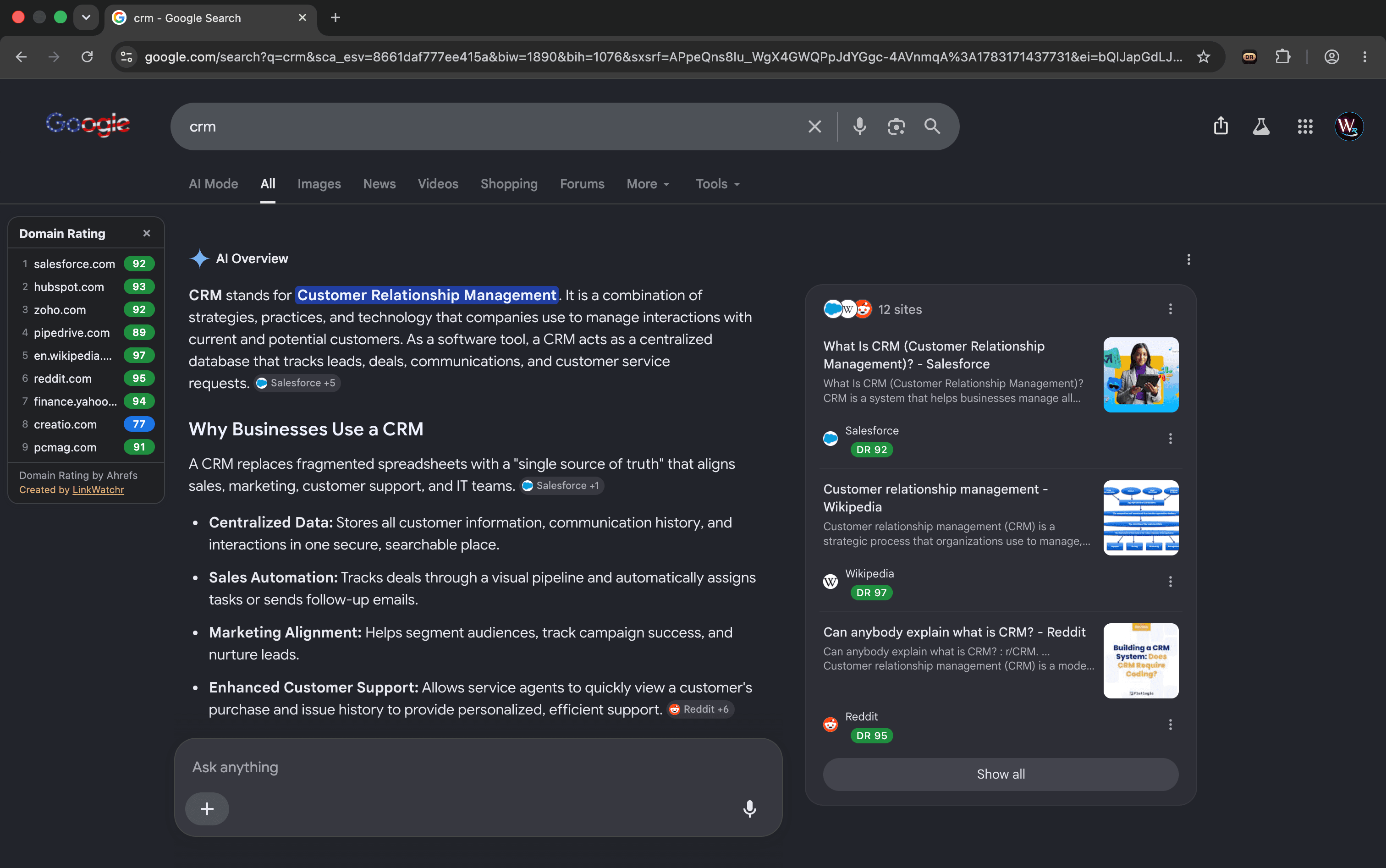
Target what you can actually win instead. For a startup, the winnable keywords fall into three buckets:
- Long-tail and use-case terms. Not "email marketing software" but "email marketing software for Shopify stores" or "email marketing for real estate agents." Lower difficulty, and the searcher is closer to a specific buying decision.
- Comparison and alternative terms. "[Incumbent] alternative," "best [category] for [audience]," "[Tool A] vs [Tool B]." These pull people who are already in-market and shopping, which is exactly who converts.
- Job and sub-feature terms. The specific things people actually try to do. For an email tool, that is "email template builder," "drag and drop email editor," "free email signature generator." Far easier to rank, and each one is a doorway to your product.
Pick pages by rankability and revenue, not by vanity
With a shortlist of winnable keywords, decide which pages get your links using three questions:
- Can this page realistically rank at my DR? Check the keyword difficulty against the authority you actually have. If the top results are all DR 60+, skip it for now.
- How close is this page to revenue? A comparison page or a use-case page where someone is choosing a tool is worth far more than a top-of-funnel blog post that never mentions your product.
- Can I pass authority to a money page from here? Sometimes the smart move is to build links to a rankable blog post, then internal-link from that post to the commercial page you actually want to grow. The blog post earns the links; the internal link funnels the authority where it converts.
This is also why the homepage is rarely the right target early. Build links to specific, winnable pages, comparison pages, use-case pages, and strong blog posts, then use internal links to route that authority toward the pages that make money.
The metric to judge yourself on is not "how many referring domains do I have." That is a vanity number, and it is the one every other guide tells you to chase. The metric is "how many links are pointed at pages that can both rank and convert." Fifty links spread across pages you will never rank is worse than fifteen aimed at pages that are one push from page one.
Scalable plays for when you have traction or budget
Once you are past the cold start and targeting the right pages, you can layer in the repeatable link-earning tactics. The trick is knowing which ones are worth your time at your stage. Here is the full menu, mapped to when each one starts to pay off.
| Tactic | Best when you are | Rough cost | Effort |
|---|---|---|---|
| Directory + listing submissions | DR 0, any budget | Free to low | Low |
| Community answers (Reddit, Quora) | DR 0+, any budget | Free (your time) | Ongoing |
| Foundational entity + citation links | DR 0, any budget | Free | Low, once |
| Peer + ABC link exchanges | DR 10+, any budget | Free | Medium |
| Expert commentary (source requests) | DR 10+, time to spare | Free (your time) | Medium |
| Guest posting | DR 15+, some budget | $100 to $500 typical | Medium to high |
| Competitor backlink gap replication | Any stage, has a tool | Tool cost | Medium |
| Niche edits / link insertions | DR 20+, has budget | $150+ per link | Low to medium |
| Linkable assets + outreach | DR 20+, content capacity | Content cost | High |
| Digital PR | DR 40+, real budget | $$$ | High |
| Podcast guest appearances | Any stage, founder-led | Free to low | Medium |
A few of these deserve a note, because they punch above their weight for startups specifically.
Expert commentary is the best free link for a founder
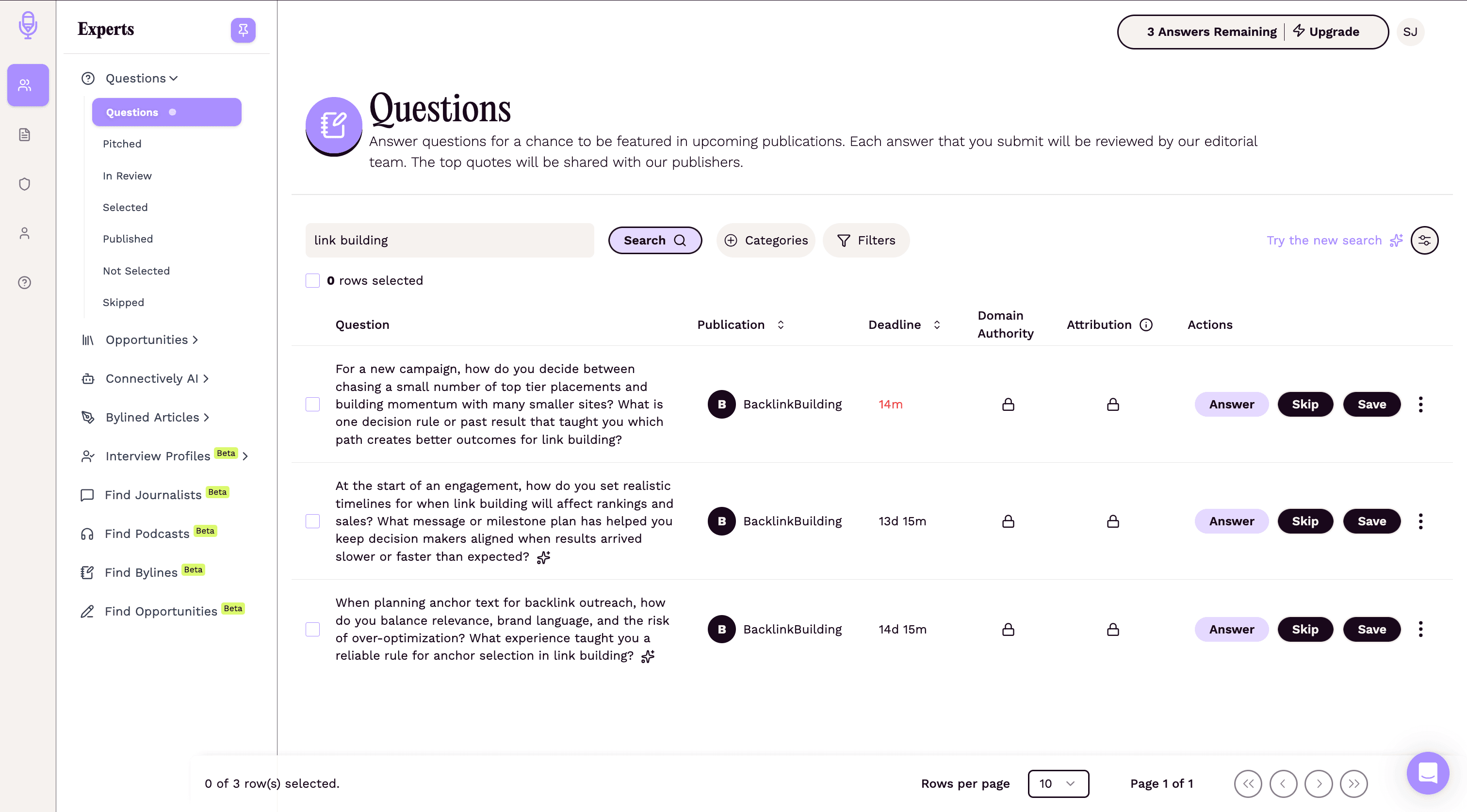
Source-request platforms let journalists and publishers ask for expert quotes, and a founder with real expertise can answer, get quoted, and earn a link from a publication that would never take a cold guest-post pitch. The live ones worth using are Connectively, Featured, Qwoted, MentionMatch, and SourceBottle. It is free on most of them, it builds your personal authority, and the quotes often get pulled into AI answers later.
Set expectations: acceptance is competitive, often in the single digits per pitch, so it is a numbers game. Be fast, stay under a couple hundred words, answer exactly what was asked, and lead with a line a journalist can quote verbatim.
Linkable assets and digital PR: the paid-attention plays
When you can produce real content, the two tactics that reliably earn links are original data (a survey, a benchmark, a study from your own product usage) and useful free tools or calculators. Both are also what other writers and AI models cite. Digital PR wraps outreach around those assets, and among practitioners it has become the tactic most people rate their most effective. It also needs budget, a real story, and time, which is why it sits at the funded end of the table.
Competitor gap replication is the prospecting engine
Whatever your stage, this is how you find targets. Take two or three competitors, pull their backlinks in a tool, and look at where they got links you could plausibly get too: the directories, the roundups, the resource pages, the podcasts. It turns "who might link to me?" from a blank page into a working list.
Link building in the AI era: get cited, not just ranked
If you are starting link building in 2026, you are building for two systems at once, and that reshapes what a link is for.
The first is Google's classic ranking. The second is AI answers: ChatGPT, Perplexity, and Google's AI Overviews, which now appear on a large share of searches. When someone asks an AI for "the best [your category]," you want to be in the answer. The good news is that the two goals pull together, because the pages AI tools cite are overwhelmingly the same pages that already rank well in Google. You are not doing separate work.
What that means in practice is that a few link sources are now worth extra:
- Listicles and roundups you appear in. "Best [category] for [audience]" posts are prime AI-citation fodder. Getting included in them is one of the highest-value placements you can chase.
- Reddit and Quora threads. Heavily used as sources by LLMs, which is another reason the community work in your cold start pays off twice.
- Original data and clean comparison content. Structured, quotable, sourced content is what both writers and models pull from.
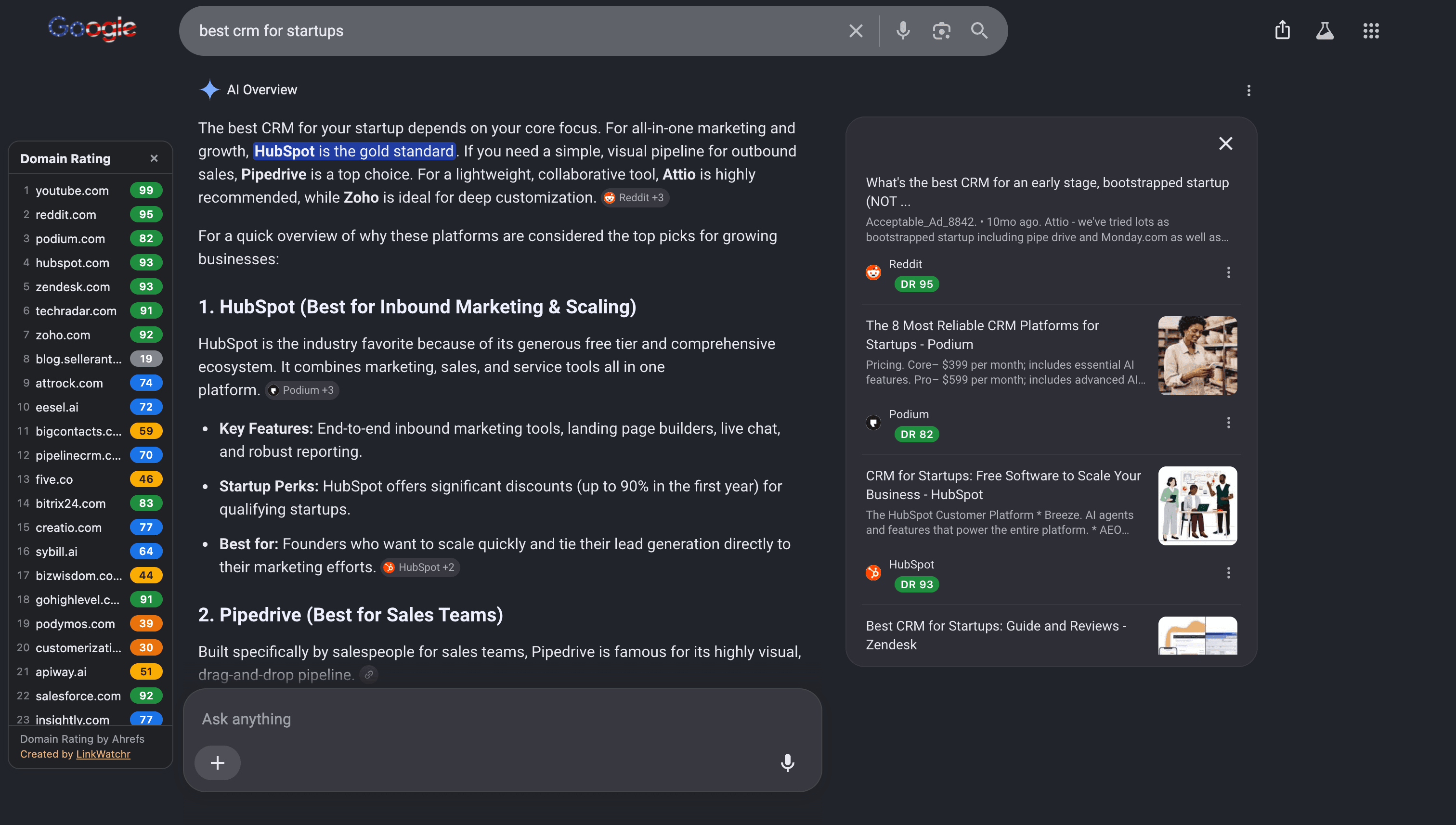
This is the same link building, chosen and structured so a model can quote it. Most SEOs believe backlinks affect AI visibility, but few have changed how they build, which makes moving now a cheap first-mover advantage.
In-house, freelancer, agency, or do it yourself
At some point you decide whether to keep link building in-house or pay someone. There is no universal answer; it comes down to your stage and budget. Here is the honest version, with no push toward hiring anyone and no agency names.
| Option | Best fit | Rough cost | Watch out for |
|---|---|---|---|
| DIY, founder-led | DR 0 to 20, more time than money | Your time + a monitoring tool | Doesn't scale, and it competes with everything else you do |
| Freelancer | You have repeatable work to hand off | Per link, or a small retainer | Quality varies, and your link records can leave when they do |
| Agency | Funded, and you want capacity fast | A retainer plus publisher fees, usually four figures a month | You are furthest from the work, so you have to verify what you paid for |
| DIY + tools | Most startups, most of the time | Your time + software | You still run the strategy; buy placements only when they are worth it |
In short: run it yourself while you are small, because the founder-led links (community answers, expert commentary, early guest posts) are stronger coming from you anyway. Add a freelancer or the occasional paid placement as you grow. Only take on an agency retainer once you are funded and the volume justifies it. Whichever you pick, keep your own record of what was built and whether it is still live.
The part every guide skips: keep the links you paid for
Every article on this topic ends when the link goes live. That is where the expensive mistake begins.
You just spent weeks, and often real money, building these links. Say you are a funded startup putting $2,000 to $5,000 a month into link building. A large share of those links will quietly disappear. Most links eventually rot: the data shows about two-thirds of all backlinks die over time, and roughly a fifth of the links you build are gone within the first year. They get removed in an editorial refresh, silently flipped from dofollow to nofollow, 404'd when a page moves, or dropped from Google's index. None of it comes with a notification.
Attach a price to that. Even mid-market links run a couple hundred dollars each, and a serious campaign spends into four figures a month. Every link that dies is that money gone, and you usually find out months later, when rankings slip and you go digging. You cannot reclaim a link you do not know is gone, and you cannot chase the editor if you never wrote down who they were.
So build a system of record from link number one. Even a spreadsheet works at the start. For every link, capture the target URL, the referring page, the anchor, whether it is dofollow, its status, what it cost, where it came from, and the contact who placed it. Then check them on a schedule, so you catch a drop in days, not quarters. When a link disappears, that record is what lets you email the editor the same day and get it back.
This is the gap I built LinkWatchr to close. It keeps that record (with custom columns for cost, vendor, contact, and campaign), checks every link on the schedule you set, and emails you the moment one is removed, turned nofollow, has its anchor changed, or drops out of Google's index. For a startup the math is blunt: it starts at $10 to $13 a month, less than the cost of losing a single link. Here is how it works:
For the full method behind this, we have a dedicated guide on backlink management.
Don't spend $2,000 a month building links you can't see
Your startup link-building blueprint, in order
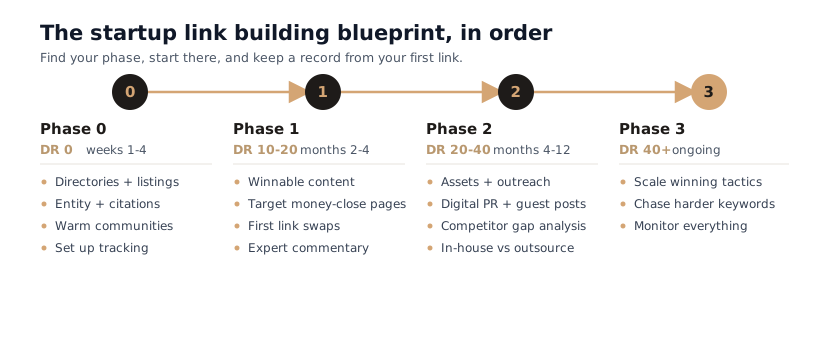
Put it together and it sequences by phase. Find where you are and start there.
Phase 0: DR 0 (weeks 1 to 4)
- Submit to every legitimate directory and listing for your niche.
- Claim your foundational entity and citation profiles.
- Start warming accounts and helping in two or three communities.
- Set up a link tracker before your first link.
Phase 1: DR 10 to 20 (months 2 to 4)
- Publish winnable content: long-tail, use-case, and comparison pages.
- Point links at pages that can rank and convert, not the homepage.
- Start peer and ABC exchanges now that you have something to trade.
- Answer expert-commentary requests for your first publication links.
Phase 2: DR 20 to 40 (months 4 to 12)
- Build linkable assets and run outreach around them.
- Add digital PR and steady guest posting on relevant sites.
- Mine competitor backlinks to keep the prospect list full.
- Decide what to keep in-house and what to outsource.
Phase 3: DR 40+ (ongoing)
- Keep the winning tactics running and go after harder keywords.
- Monitor everything; at this volume, silent link loss is your biggest leak.
None of this needs a marketing background or a budget to begin. It needs the right move for the box you are in, done in order, with a record of what you build.
Link building for startups FAQs
How do I start link building for a startup from scratch?
Start with the links you can get without permission, because at a new domain nobody will link to you or swap with you yet: directory and listing submissions (Product Hunt, Crunchbase, G2, niche directories), your foundational profiles (LinkedIn, socials, GitHub), and useful answers in the communities where your buyers hang out. That combination can move you from DR 0 into the low teens in about four to eight weeks, at which point outreach and exchanges become viable.
How can I exchange links when my DR is 0?
Mostly you cannot, because a swap is a trade and your domain has nothing to offer yet. Get off zero first with directories and community work. Once you reach roughly DR 10 to 15, you can swap with other startups at a similar stage, or use three-way (ABC) exchanges that look more natural than a direct reciprocal link. Keep them relevant, in-content, and a small part of your overall profile.
How long does link building take to show results for a startup?
Plan for the first movement in 60 to 90 days, real traffic gains in three to six months, and compounding after six to twelve. Directory and entity links land fastest; content and PR links take longest but are worth the most. It starts slow and accelerates, which is why steady beats sporadic.
How many backlinks does a startup actually need to rank?
There is no fixed number; it depends on the keyword and who you are up against. For low-competition, long-tail, and use-case terms, ten to twenty solid links can be enough. For commercial terms you may need many more, which is why you pick winnable keywords first. Benchmark against the referring domains of the pages already ranking for your exact target, not a round number someone quoted you.
Are directory submissions safe, or will they hurt me?
Legitimate ones are safe, and they are among the fastest ways off DR 0: Product Hunt, Crunchbase, G2, Capterra, and reputable niche lists. What hurts is the "submit to 500 directories for $10" services that dump you onto link farms Google ignores or distrusts. A handful of strong, relevant directories beats hundreds of junk ones.
Start monitoring today
Never lose a backlink again
Track every backlink automatically and get instant alerts the moment something changes.